
Product added to shopcart!




Your shopcart is empty

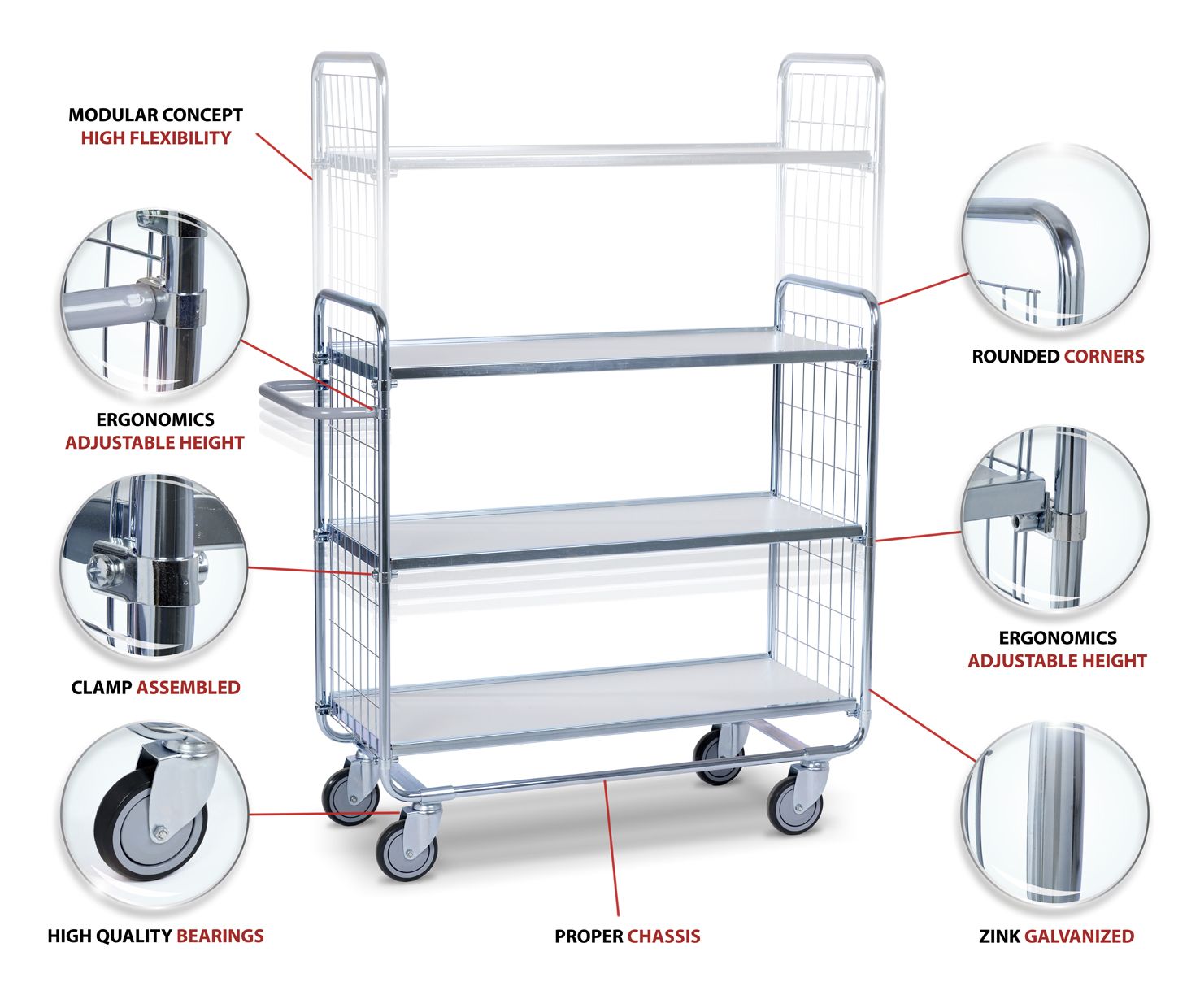
Ergonomics in Warehousing and Logistics – How are you putting strain on your body?
In warehousing, logistics and material handling, the body is one of the most important tools we have. Every day, employees push, pull, lift and move large quantities of goods. A single lift may not feel particularly strenuous, but when the same movement is repeated many times throughout the working day, the accumulated physical strain can become significant.
Heavy lifting, repetitive movements and awkward working positions can eventually lead to discomfort and injuries in the back, neck, shoulders and arms. Ergonomics is therefore not only about how heavy something is, but also how often the task is performed, at what height and in what working position.
By reviewing how materials are transported and how the workplace is designed, unnecessary physical strain can be reduced – while making material handling more efficient at the same time.
Strain injuries are a workplace issue
Strain problems are common in working life. In warehouses and logistics environments, the risk can be particularly noticeable as many tasks involve repeated lifting, pulling, pushing and picking.
Common risk factors include:
- Heavy or repetitive lifting
- Working with a bent or twisted back
- Picking from floor level
- Working with the hands at an excessive height
- Carrying materials manually over long distances
- Pushing or pulling heavily loaded trolleys
- Monotonous and repetitive tasks
It is therefore not always one particularly heavy lift that causes problems. Many smaller loads repeated hundreds of times during a shift can also put significant strain on the body.
For employers, strain problems can also have consequences beyond discomfort for the individual employee. Sick leave, rehabilitation and reduced work capacity can affect both productivity and operating costs.
The right trolley can reduce physical strain
One way to improve ergonomics in warehousing and logistics is to reduce the need to carry materials manually. With the right trolley, goods can instead be transported between different areas of the workplace in a more ergonomic way.
However, simply having a trolley is not enough. It needs to be adapted to the task.
A trolley that is too low may require the user to bend down with every pick. If the shelves are positioned too high, the work may instead place unnecessary strain on the shoulders and arms. A heavily loaded trolley with unsuitable wheels or an inappropriate design can also require unnecessary force to get moving and manoeuvre.
The right trolley should make the job easier – not create another physically demanding task.
Adapt the trolley to the user and the task
People have different heights, strengths and physical capabilities. Flexibility is therefore an important part of creating an ergonomic workplace.
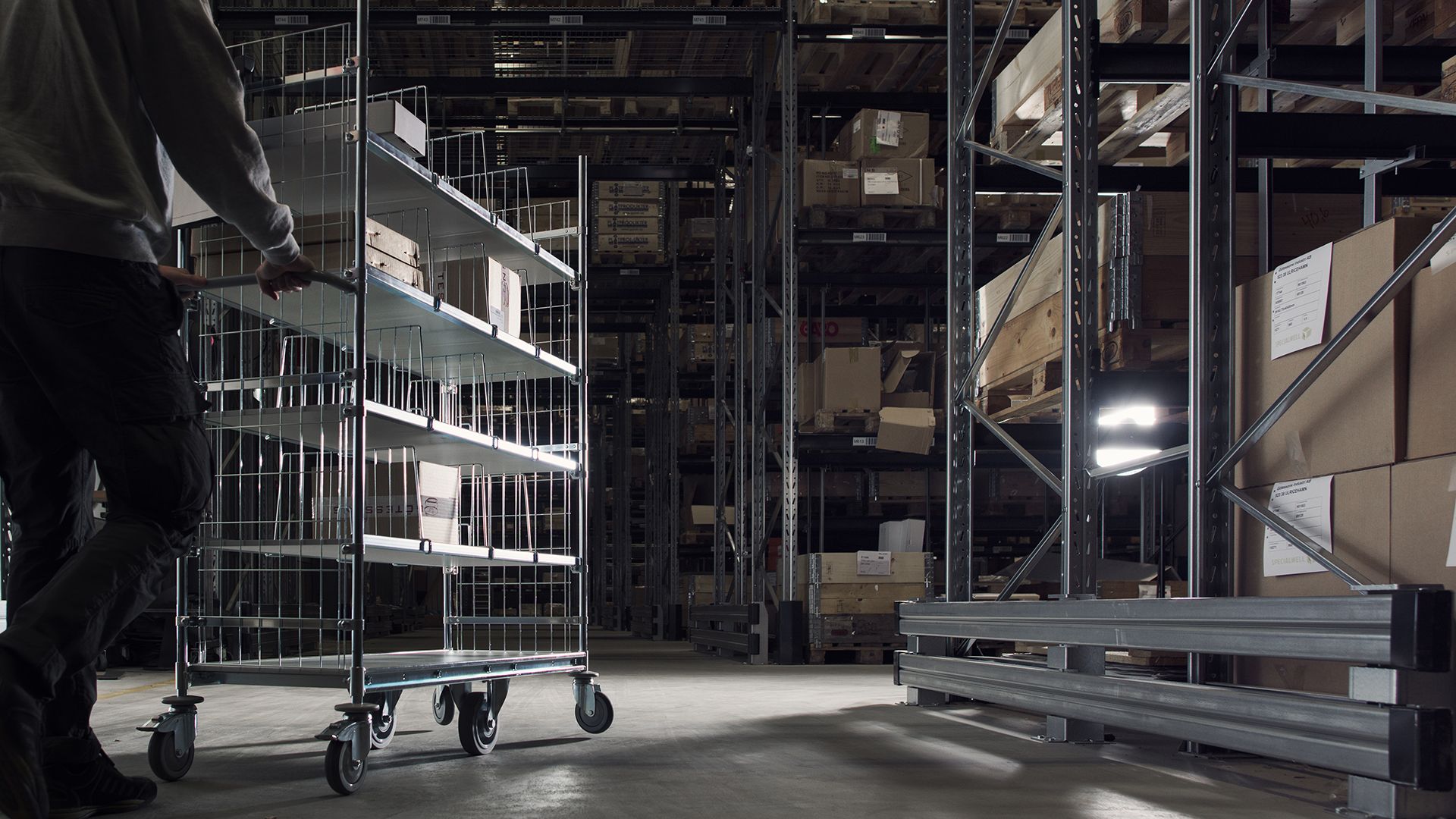
A trolley that can be adapted to both the task and the user makes it easier to achieve a good working position. This may involve adjusting the number and position of the shelves so that frequently handled goods are placed at a comfortable picking height.
This can help employees avoid some of the deep bending, stretching and high lifting that might otherwise be repeated throughout the working day.
The choice of wheels is also important. Selecting the right wheels for the floor surface, load and application affects how easily the trolley rolls and manoeuvres. For certain trolleys, the chassis design can also make a considerable difference. With a balance-mounted wheel configuration, the effective wheelbase is shortened, making even a loaded trolley easier to manoeuvre.
Small details can make a big difference when the same task is performed many times every day.
More efficient order picking with better ergonomics
Ergonomics and efficiency do not have to be opposites. In fact, they often go hand in hand.
For order picking in warehouses and e-commerce operations, for example, a well-designed picking trolley can make it possible to collect several orders during the same picking round. By adapting the position of the shelves to the items being picked, products can also be kept at more suitable working heights.
This means fewer unnecessary movements and can reduce the need to bend, stretch and twist the body.
The design of the handle and the manoeuvrability of the trolley are also important. A trolley that is easy to steer and requires less force to move creates better conditions for a smooth workflow.
When every picking task becomes a little easier, the difference can be significant over the course of an entire working day.
Look at the entire material flow
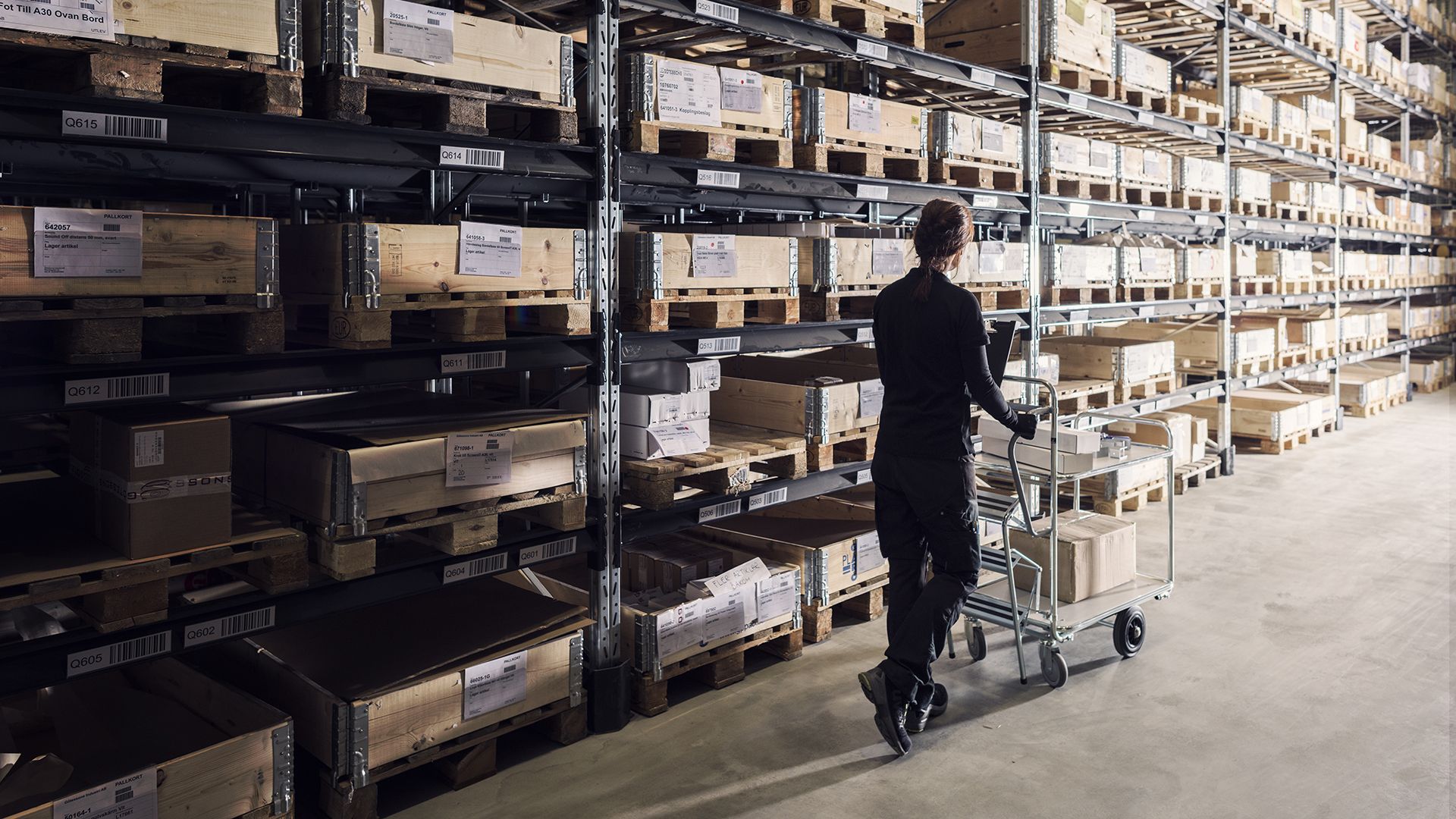
To improve ergonomics, it is important not to focus solely on a single workstation. Instead, follow the material through the entire operation.
Where are goods lifted? How far are they transported manually? How many times is the same product moved? Do employees need to bend down to reach materials? Are there sections where a heavily loaded trolley is repeatedly pushed or pulled?
By mapping these tasks, it becomes easier to identify physical strain that might otherwise simply be accepted as part of the working day.
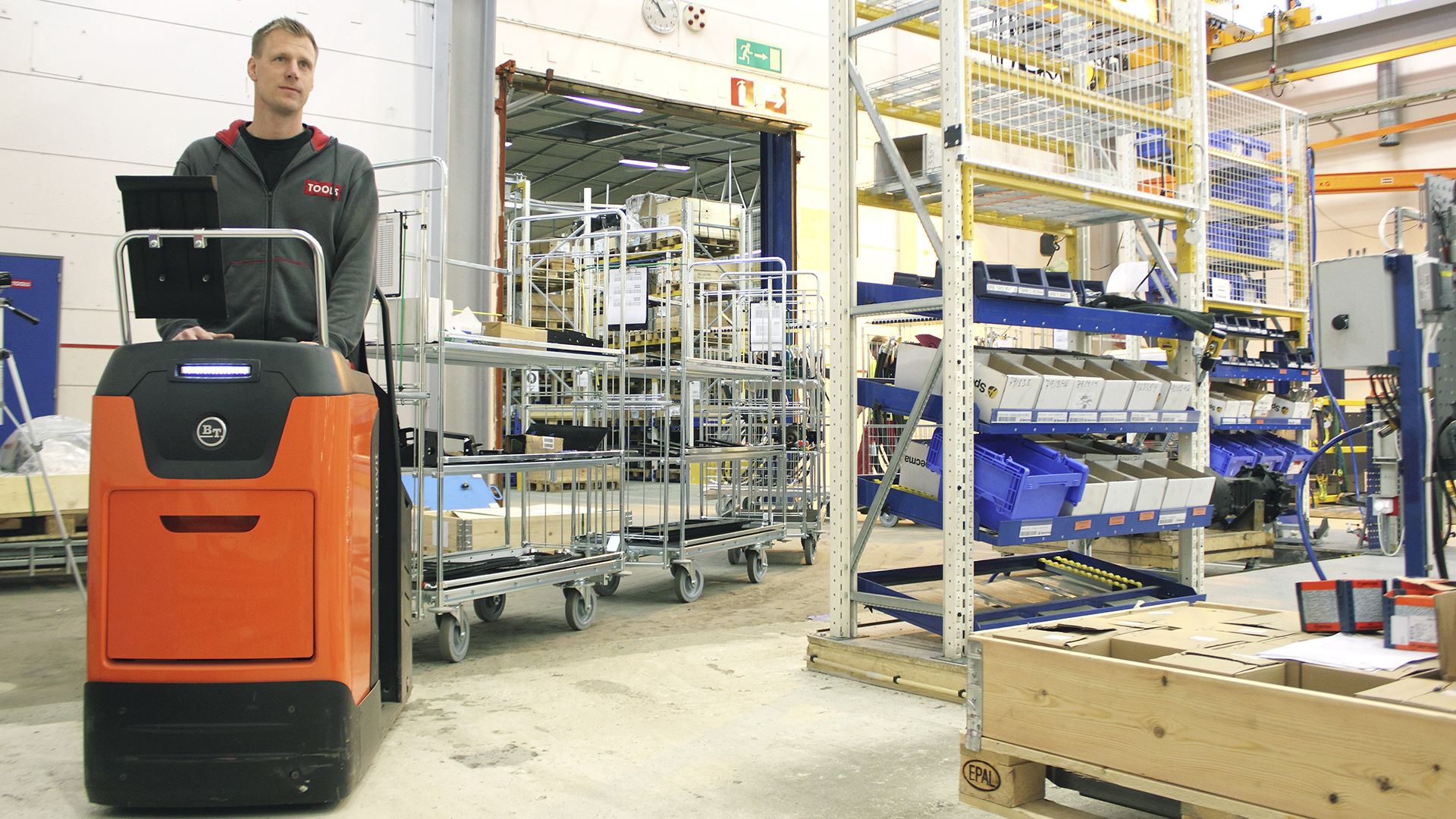
In some operations, an ergonomic manual trolley is sufficient. For heavier loads or longer transport distances, however, it may be appropriate to complement manual equipment with electric tow tractors, picking trucks or other solutions for internal material transport.
The objective is the same: to let the equipment take more of the load.
Ergonomics is an investment
Investing in ergonomic equipment is not only about the working environment. It can also be a smart long-term financial investment.
Flexible trolleys that can be adapted and equipped with different shelves, wheels and accessories can be used for a variety of tasks and modified as operational needs change. This extends their useful life and can contribute to lower costs over the product's lifecycle.
At the same time, a better ergonomic working environment can help reduce physical strain and create better conditions for employees to work efficiently throughout the day.
How are you putting strain on the body in your operation?
A good first step is to observe a typical working day. Look for the small, repetitive tasks: lifting something from the floor, reaching for a box, turning a heavily loaded trolley or manually transporting goods when the process could be simplified.
This is often where the greatest potential for improvement can be found.
With the right trolley and the right material handling equipment, it is possible to create a better flow that puts both people and operations at the centre. By adapting equipment to the task, physical strain can be reduced while material handling becomes smoother and more efficient.
At Helge Nyberg, we develop trolleys and solutions for internal material handling with the user in focus. From manual trolleys for warehousing and order picking to electric solutions such as trucks and walkies for heavier transport – our goal is to make material handling easier, more efficient and more ergonomic.
Details that save time in your warehouse
In an intense warehouse environment, every second is precious. Small details in the workflow can mean the difference between a profitable logistics chain and unnecessary costs. Optimizing your operations requires an understanding of the biggest time wasters and how the right equipment can eliminate them.
3 tips to streamline the daily picking
Order picking should be quick and easy, no matter if your business handles 10 or 10,000 orders a day. If you can reduce the time from 20 seconds to 15 per pick, it makes a big difference in the end. There are several ways to improve the efficiency of the order picking. We give you three tips on how your company can reduce the picking time per product and in that way save money.